
For many supply chain organizations, the conversation about resilience has shifted from reacting to disruption to understanding exposure. That shift is forcing companies to look deeper into their networks beyond tier-one suppliers, beyond transactional data, and into the physical and geographic realities that shape how goods are sourced, moved, and sustained over time.
The question is no longer whether organizations have data, but whether they understand where that data originates and how it connects across their supply chains.
This growing emphasis on source-level and location-based intelligence is reshaping how companies think about advanced analytics and AI. Before algorithms can meaningfully predict risk, optimize networks, or simulate future scenarios, organizations must first build accurate, live, and spatially connected data foundations. As Cindy Elliott, who leads Esri’s business industry sector teams, sees it, resilience and AI readiness are earned upstream by grounding decisions in real-world conditions, visibility into supplier ecosystems, and an integrated view of the physical supply chain.
“If you don’t actually get the source and the origin data correct and the live feed data correct, AI isn’t going to produce what you [expect],” Elliott told Supply Chain Management Review during the recent NRF Retail Big Show in New York City.
Esri offers geographic information system (GIS) software, location intelligence and mapping. Its software is used by organizations seeking to maximize sustainable and resilience supply chains.
Resilience begins at the source
One of the most visible areas where this data gap shows up is responsible and resilient sourcing. Elliott pointed to the growing number of consumer brands working to understand not just who their suppliers are, but where raw materials originate, and under what environmental and social conditions.
Using coffee as an example, Elliott described how Nestlé has worked to build resilience in a supply chain it does not directly own. “They don’t own the coffee farms. In fact, they don’t even often own the distribution to get the raw material to the roaster,” she said. Yet Nestlé recognized that climate stress was shrinking the land suitable for coffee production.
By working closely with farming communities and tracking environmental conditions across more than 100,000 coffee growers, Nestlé has been able to identify where land is under stress and how to help those environments recover. “They needed to shore up their supply chain for coffee for decades to come,” Elliott said.
The result is a data foundation that now supports more advanced modeling. “Imagine they have all those years of data and farm data and conditions,” she said. “Now they can run models; where’s the next 10 years of coffee going? Is the environment or land going to be more applicable to coffee growing than where it is today?”
The challenge of tier-three visibility
This kind of insight remains elusive for many organizations because supplier visibility often fades beyond tier two. “By the time it gets from tier one, tier two, tier three, tier four, tier five, a lot of manufacturers and retailers could map to tier two,” Elliott explained. “But it gets fuzzy tier three; it’s all brokers and other influencers.”
Historically, that opacity was tolerated, but that is changing. “There wasn’t the scrutiny, there wasn’t the reporting requirement, and there wasn’t the brand risk,” Elliott said. “We didn’t care as long as the bean showed up.”
That has changed. Environmental reporting requirements, reputational risk and, most critically, resilience concerns are pushing companies to get closer to raw material origins. “We need to safeguard or secure our supply network for five and 10 years from now,” Elliott said.
From sourcing to network optimization
Beyond raw materials, the same data-first logic applies to network and asset optimization. Elliott pointed to work Esri has done with companies like Cisco and Chick-fil-A, focusing on how physical assets—stores, distribution centers, fleets, and service networks—interact as a system.
“This is about where am I operating globally? What’s my real estate? What’s my store footprint? What’s my distribution footprint?” she said. The goal is not isolated optimization, but system-wide visibility that accounts for demographics, traffic, population shifts, and service-level requirements.
When those elements are connected spatially, organizations can see vulnerabilities propagate across the network. “They create these graph databases that they can see a pressure or vulnerability at one point and understand its connection to a disruption,” Elliott explained.
That connected view becomes the basis for a digital twin, one that reflects the live state of the supply chain rather than static assumptions. “Now you have a digital twin of your entire supply operation,” she said. “You’re not having people being told there’s a typhoon. The system’s telling you what the impact is.”
Breaking silos
The shift toward resilient, data-driven networks is also forcing long-standing organizational silos to break down. “Real estate was in a silo. Their operational data was in a silo. Their built environment was in a silo,” Elliott said, describing what she has seen at large global enterprises.
What is changing, she added, is supply chain’s influence. “Supply chain [now has] such a seat at the table today than they did five years ago” that instead of real estate teams planning expansion first and looping in supply chain later, companies are beginning to design growth strategies collaboratively.
“Location is a common string that connects everything,” Elliott said.
AI readiness is earned, not installed
The takeaway for supply chain leaders is clear: AI value does not come from installing tools, but from earning readiness through disciplined data work.
“It’s a great example of you invest in and get the value out of building the foundation in order to get the big wins on the backside,” Elliott said.
As organizations look toward scaling AI beyond pilots in 2026, the winners will not be those with the most advanced algorithms, but those that understand their networks spatially, operationally, and systemically well enough to put AI to work where it matters most.
SC
MR

More Network Design
- How industrial real estate decisions are shaping supply chain performance
- The always-ready supply chain: Turning disruption into competitive edge
- After AI agent pilots underperformed: Resetting supply chain automation for operational impact
- Supply chain resilience and AI readiness start with location-based data
- To make or buy the supply chain?
- More Network Design
What's Related in Network Design
 Explore
Topics
Procurement & Sourcing News
- Why companies blame the wrong supplier … and miss the real failure
- NextGen Supply Chain Conference unveils agenda focused on AI, execution and the future of leadership
- From fragmented negotiations to coordinated negotiation performance: an AI-enabled approach
- Supply chain resilience isn’t a data problem; it’s a judgment problem
- Why your supply chain risk management plan will fail
- When component verification becomes operational
- More Procurement & Sourcing
Latest Procurement & Sourcing Resources
About the Author
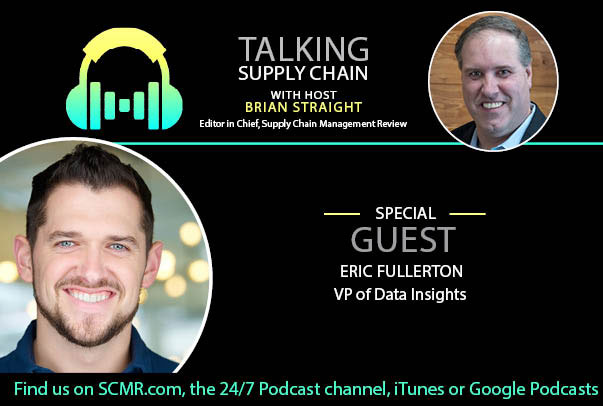
Brian Straight, SCMR Editor in Chief

Brian Straight is the Editor in Chief of Supply Chain Management Review. He has covered trucking, logistics and the broader supply chain for more than 15 years. He lives in Connecticut with his wife and two children. He can be reached at [email protected], @TruckingTalk, on LinkedIn, or by phone at 774-440-3870.
Follow SCMR on social media.
@SupplyChainManagementReview on Facebook
@SCMR on Twitter
SCMR on Linkedin
Subscribe

Supply Chain Management Review delivers the best industry content.

Editors’ Picks



